TWO FIRES, pt. 3
quantity of life
continued continued
To conclude with a few remarks on this term “quality of life,” I’m really tempted here by a superficial Hegelianism: “quantity becomes quality.” The right wing clearly thinks the migrant population is the quantity to keep in mind, although I’ve tried to suggest a more salient quantity is social housing stock or “social infrastructure” in general. As the UN Special Rapporteur for extreme poverty and human rights concluded, “much of the glue that has held British society together since the Second World War has been deliberately removed.” There has been an intentional divestment from housing, healthcare, education, poverty assistance, or anything helping to keep the public sphere afloat.
The creator of yookay aesthetics again uses the term “quality of life” when discussing difficulties caused by immigration but then concludes “we can imagine a hypothetical New British State in which those issues were redressed — and then what would the argument against [multiculturalism] be?” He asserts a core “aesthetic and moral” problem would remain for those connected to “Historical Britain” or the “older idea of Britain” (this is why Harry Brown is a pensioner who kills teenagers, more on this in a moment). In other words, even if migrants could be said to cause no social or economic problems, they would still increase the overall number of kebab shops and therefore produce aesthetic and moral discomfort. Real English people don’t even drink water, how do you expect them to cope with ayran?
Attentive readers will recognize that he has duplicated the structure of a classic thought experiment beloved by liberals: “Imagine a hypothetical state in which economic issues were solved, it still wouldn’t fix problems like racism, sexism, homophobia, transphobia, emetophobia, the essential corruptibility of the human spirit, overuse of Lynx body spray in poorly ventilated areas, paper cuts, dehydration, sinkholes, pigeons shitting on Lord Nelson’s Column, sorry I’ve fallen asleep.”
The “socialism won’t solve racism” argument and the “socialism won’t stop me being put off by mosques and road man slang” argument are essentially the same, deliberately ignoring the degree to which functioning social and economic institutions matter and powerfully shape our lives. (I know, I know, you were expecting me to say something original. I’m sorry.)
Of course deindustrialization and globalization have undoubtedly erased spaces of cultural heritage across “Historic Britain” to be replaced with vape shops, single-use plastics and the Asda clock tower. I don’t think migration can be blamed for what is a fundamentally capitalist phenomenon, however, and focusing on the face of economic processes tends to merely obscure these processes and increase violence. Indeed, as I said before, the culture of the UK speaks to a more functional cosmopolitanism than other places in Fortress Europe, although this is probably breaking down currently.
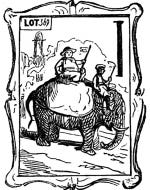
You don’t need to read history or even postcolonial theory (not sure if that’s banned too) to understand how the Empire set the tone for this hybridity either. Just take a look at Vanity Fair (or any of its more than half a dozen BBC adaptations). Set in the Napoleonic Wars, loads of characters run off to the colonies repeatedly throughout the novel. It’s not possible to take over half the world without eating some kedgeree. William Makepeace Thackeray wasn’t even British born (sus). “Historic Britain” was always international; indeed the backstory of Harry Brown is that he was a marine during the Troubles helping to put down the Irish which is how he now understands how to wage urban warfare against teenagers.
Finally, if our interest is a contemporary aesthetics of British immiseration, I don’t think multiculturalism is obligatory to produce it. One look at Cornwall shows some extremely “UK” vibes in an overwhelmingly white area without migrants (that is, if you exclude A. those currently being detained nearby in a floating prison and B. the English).